
Summer Vision: Contact Lenses for Young Athletes, Sunglass Tints, Stellest Lenses for Myopia and Petite Eyewear at Sudbury Eye Care
Posted On: Tuesday, July 7, 2026

By Dr. Lorraine Labiento Smith · Sudbury Eye Care, Sudbury MA · July 2026
Summer is my favorite time of year — long days, kids outdoors, and athletes gearing up for their best season yet. This month I’m covering four topics that have been coming up a lot at our practice: contact lenses for young athletes, how to choose the right sunglass lens, the newly FDA-approved Stellest Myopia Control Lens, and a closer look at our Petite Optical Collection.
Contact lenses for young athletes: What every sports parent should know.
Myopia — nearsightedness — is expected to affect 50% of Americans by 2030. For a young athlete, even a small amount of uncorrected blur at distance quietly chips away at coordination, response time, and depth perception. I tell my youngest patients, some of whom are nervous about contacts for the first time, that wearing their prescription isn’t just for them — it’s for their team. When they can see and respond better, they usually play better.
Why contact lenses outperform glasses on the field
- Full, unobstructed field of vision — no frames cutting off peripheral sight
- No fogging, slipping, or breaking during play
- Stable vision during fast movement and body contact
- Daily disposable options are hygienic and convenient — no cleaning required
- Can correct one eye independently when needed
- Specialty tinted lenses available for sport-specific contrast needs
As a contact lens specialist with decades of experience working with athletes at every level, I sometimes prescribe a slightly different lens power for sport than for school — optimizing distance vision on the field while keeping a comfortable prescription for the classroom.
Give the body time to adapt
Athletes should start wearing contact lenses well before their season begins — not during tryouts. The visual system needs time to adjust to improved peripheral cues, and the athlete needs to build confidence in the lenses before game pressure kicks in.
What about sports frames?
For children who aren’t ready for contacts sports frames with impact resistant polycarbonate lenses are available at Sudbury Eye Care. We also carry flexible frames with impact-resistant polycarbonate lenses designed for active play. Growing kids’ prescriptions can change quickly — myopic young athletes should be evaluated every six months.
A note on sports vision therapy
Competitive athletes may also benefit from Sports Vision Therapy — a specialized program designed to improve hand-eye coordination and visual reaction time. Most professional teams work with a Sports Vision Therapist. If your child’s coach or trainer brings it up, it’s worth exploring.
Youth sports is big business.
It is an enormous investment in family time and emotional /social growth for our children. Contact lenses and sports glasses need to be on the equipment list to allow your child the best vision for their sport.
Ready to get your young athlete seeing at their best before the season starts? Book a contact lens fitting at Sudbury Eye Care
Polarized vs. Tinted Sunglasses: Which lens is right for you?

One of the most common questions we get in optical: “Does it matter which lens I choose?” It absolutely does — and the answer depends entirely on how you use your sunglasses.
Polarized lenses
Polarized lenses are widely considered the gold standard for sunglasses. They block horizontal light waves — the ones that create glare off water, roads, and snow — while allowing vertical light to pass through. The result is dramatically reduced glare and sharper, more comfortable vision outdoors. Tint colors filter specific wavelengths to control contrast, brightness, and color perception in the visible range of roughly 380 nm to 780 nm.
One caveat: polarized lenses can interfere with certain screens, including some car dashboards, GPS devices, and cell phones. If you spend a lot of time on your phone outdoors or use specialized equipment, a quality tint with UV protection may actually serve you better.
Tinted lenses by color — a quick guide
- Gray (Neutral) — General everyday use. Absorbs all visible light wavelengths equally. Most common. Not recommended for high myopia, high astigmatism, or retinal disease.
- Brown / Amber — Overcast days, fishing, boating, skiing. Absorbs the shortest wavelengths, selectively filtering high amounts of blue and violet light (roughly 380 nm to 450 nm). Filters blue-violet light and increases contrast. It’s also ideal for high myopes, high astigmatism or retinal disease due to the increased contrast.
- Green — Bright sun, general outdoor use. Higher contrast and clarity than gray.
- Yellow / Rose — Low light, driving, indoor sports. Light shades improve low-light contrast; darker shades reduce glare. Maui Jim’s Maui Rose is excellent for driving and reduces eye strain.
Mirrors are applied to the front surface of the lens and are used to further reduce glare. They come in colors such as black, silver, blue, yellow and orange.
- Full Ski Mirror (Solid): Provides maximum glare reduction and hides your eyes completely.
- Flash Mirror: A lighter coating. It offers a subtle reflection while letting more light through.
All of the sunglass lens colors can be tinted with UV or are available in Polarized laminate. Essilor Colors even offer a gradient polarized tint option and a color called Sienna (a brown/grey hybrid).
Sudbury Eye Care carries Maui Jim Sunglasses in non-prescription and Maui prescription. Custom optical prescriptions are sent to our Essilor Lab in RI. VSP and Eyemed insurance can be used to purchase prescription sunglasses (VSP has a contract directly with Maui Jim and can be used for purchase).
Whether you’re choosing for sport, driving, fashion, or long-term eye health, the right sunglass fitting starts with a real conversation — about what you do, what you need, and what will improve your vision.
Not sure which lens is right for you? Book an optical appointment at Sudbury Eye Care.
The Stellest lens: FDA-approved myopia control for kids who wear glasses
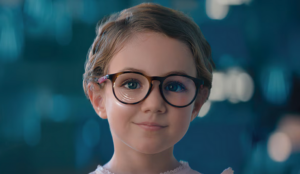
This one genuinely excited me! In Fall 2025, the FDA approved the Essilor Stellest lens — the first eyeglass lens design cleared in the United States specifically for myopia control. It had already been available in Canada and Europe for several years, and I’d been watching the clinical data closely. The day approval hit my inbox, I was on the phone with my Essilor lab asking when I could start ordering. I knew about it before they did!
Why this matters
I work with patients 4 and older. My average new myopia patient is 7-9 years old. My options were Atropine eye drops (not appropriate for every child) or full time myopia contact lenses MiSight or Ortho K (again, not appropriate for every child). Eyeglasses are for every child!
The Stellest Lens by Essilor is available in astigmatism and very high minus options. I have used this lens in my young patients, college students for maintenance and as add on therapy with Atropine for more aggressive myopia control. Stellest works by creating a central area of clear vision and a blur area in the peripheral retina. This blurred area sends a signal to the brain to slow elongation of the eye. The Stellest lens has shown a 67% reduction in myopia progression over 2 years when worn 12 hours/day. Next-Generation Spectacle Lenses for Myopia Control: Optical Designs, Mechanisms, and Clinical Efficacy.
I believe this new lens can be used beyond childhood myopia. It may be beneficial for myopic adults who creep every few years.
Book a myopia consultation at Sudbury Eye Care
The Petite Optical at Sudbury Eye Care: Frames that actually fit

Why Independent Optical Boutiques Carry Frames You Simply Can’t Find at a Chain — Especially If You’re Petite
Since 2012, I’ve been building something that doesn’t exist at most optical practices: a carefully curated selection of frames specifically designed for petite sizing — smaller nose bridges, narrower frame widths, and shorter temple lengths — for both women and men.
Finding glasses that fit properly when you have a smaller face isn’t a minor inconvenience. It’s a recurring frustration that sends patients from store to store, trying on frame after frame that slides, gaps, or overwhelms the face. I’ve heard that story hundreds of times.
What petite sizing actually means
Petite eyewear isn’t just “small” — it’s proportionally designed for a narrower facial structure. Brands I carry include Jones New York, Red Paris, Ellen Tracy, Jessica McClintock, Steve Madden, and Lilly Pulitzer, along with smaller sizes pulled from my traditional collections. I even source children’s frames in adult colorways for patients who find that children’s sizing fits them best.
I have patients who drive from Connecticut specifically for a petite optical appointment. For many of them, it’s the first time they’ve had a fitting that felt unhurried, personalized, and actually worked. That’s the experience I want every patient to have.
What to expect at a petite optical appointment
A petite fitting at Sudbury Eye Care isn’t rushed. We discuss face shape, bridge width, material preferences, lifestyle, and aesthetic. You leave with glasses that fit beautifully and were chosen with your specific facial proportions in mind — not just whatever happened to be on the shelf.
Ready for glasses that actually fit your face? Book a petite optical appointment at Sudbury Eye Care.
Your reviews make a real difference
Independent practices run on trust — and trust starts with the experiences of real patients. If Sudbury Eye Care has helped you or your family, a Google review goes a long way toward helping someone else in Sudbury or MetroWest find the right eye care. You can also reach us at office@sudburyeye.com to share your story or ask about being featured on our website.
— Dr. Lorraine Labiento Smith

I have received care Dr. Labiento-Smith since 2012 when I first moved to Sudbury. My wife and I have received great care. I ultimately got ICL surgery from Dr. Hu and was also very satisfied with his care. We now plan to take our daughters to Dr. Labiento-Smith as we have received such great care.
Patrick M. — Yelp

Learn More About: