Back to School, Back in Focus: Fall Sports Eyewear, Allergy Relief, and New FDA-Approved Drops at Sudbury Eye Care
Posted On: Monday, September 7, 2026
By Dr. Lorraine Labiento Smith — Sudbury Eye Care, Sudbury, MA — September 2026
School is back in session, the schedules are busy again, and the days are already getting shorter. I hope everyone came back from summer break with wonderful memories. This month I’m covering five topics that are top of mind at the practice right now: contact lenses and glasses for fall sports, getting ahead of fall allergy season, the new Essilor Stellest lens for myopia control (I’m genuinely excited about this one), a new FDA-approved prescription eye drop called Vizz that can reduce the need for reading glasses, and two impressive new over-the-counter dry eye drops. Keep reading.
In this issue:
- Sports frames or contact lenses: which is right for your young athlete?
- Fall allergy season — start treatment now
- Myopia control at Sudbury Eye Care
- The new Essilor Stellest myopia control lens
- Vizz: a new FDA-approved eye drop for reading vision
- New over-the-counter drops for dry eyes
Sports Frames or Contact Lenses for Sports
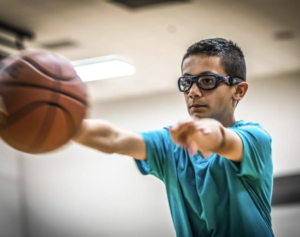
Many elite athletes have better than 20/20 acuity. Vision plays an important role in sports performance — acuity, depth perception (stereopsis), and hand-eye coordination are essential to success in nearly every sport. Professional teams typically employ a sports vision therapist to work with athletes, much like a physical therapist coordinates the brain, eyes, and muscle reflexes. An athlete’s vision is always corrected to its maximum prescription, whether that’s through sports glasses, contact lenses, or Orthokeratology.
You may not have access to a sports vision therapist as a parent, but you do have the option to fit your child with sports glasses or contact lenses. I’ve been successfully fitting children in contact lenses for over 25 years. There’s no strict “minimum age” — parent support matters more than age. Training a child to insert a lens in the office can take as little as an hour, or a few sessions.
The pros of contact lens wear for sports:
- Daily disposables are convenient and very hygienic
- Improved peripheral vision during play
- Less expensive to change if the prescription changes, compared to sports glasses
- Useful in many situations outside of practice or games
- Some vision insurance plans, such as VSP, may include contact lens fitting benefits
- Work well for part-time or occasional use
The pros of sports frame wear:
- May be more comfortable for the child
- Provides safety eye protection
- Improved clarity for higher prescriptions
- Best option for children not yet ready for contact lenses, or with more complex prescriptions
To book an appointment for a new contact lens fitting, or an optical visit for sports frames, call us at 978-443-3021.
Fall Allergy Season — Start Treatment Now
Fall allergy season is coming, and the office will soon be full of itchy, red, and watery eyes. Ragweed and mold from decaying leaves are the biggest contributors here in New England. It’s always best to start allergy medicine several weeks before the season hits. Oral and nasal steroid medications control most ocular symptoms for most patients. If your eyes are still itchy, several good eye drops are available — Retaine Allergy, Pataday, and Zaditor are excellent options. A combination of oral and topical medication typically offers the best control for more severe ocular allergies. If over-the-counter options aren’t providing comfort, call the office to schedule a medical exam.
Myopia Control at Sudbury Eye Care

Myopia, or nearsightedness, happens when the eye grows too quickly and becomes longer than average length. It results in needing eyeglasses to see far away, and it increases the risk of retinal disease — the longer the eyeball, the greater the probability of poorer vision quality, glaucoma, and retinal disease down the road. There have been extraordinary advances in controlling this growth process in children over the past ten years; disrupting that growth is called myopia control, and it’s an area I specialize in.
The treatment options we currently use at Sudbury Eye Care to reduce the progression of nearsightedness include atropine eye drops, the Essilor Stellest lens, CooperVision MiSight contact lenses, and Orthokeratology. New technology in the office is the MYAH camera, which maps the length of the eyeball over time to monitor progression and treatment efficacy, and photographs the cornea’s curvature.
Annual myopia treatment fees vary by option and range from $600–$2,200 a year; they are not covered by insurance. I work with each patient and parent to choose the best treatment option for their child. Since each option reduces progression by 50–80%, we sometimes combine approaches to achieve adequate reduction in growth progression.
Which children are at risk for myopia? Those with parents who are myopic, an early age of first prescription, and more indoor, screen-heavy lifestyles. Now is the time to have your children examined and to discuss myopia control if they’re at risk of progression.
Book a Myopia Screening Appointment
The New Essilor Stellest Myopia Control Eyeglass Lens
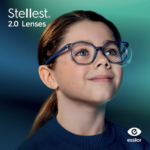
In the fall of 2025, the FDA approved the first eyeglass lens design for myopia control in the United States. Why was this so exciting? According to the FDA study, the Essilor Stellest lens slowed myopia progression by an average of 71% over two years relative to a placebo lens. My average new myopia patient is 7–9 years old, which makes Stellest an excellent first option for myopia control in young children.
Vizz: A New FDA-Approved Eye Drop to Improve Reading Vision
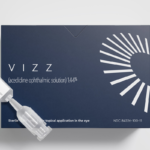
There’s a new FDA-approved prescription medication called Vizz (aceclidine ophthalmic solution) that’s used once daily to improve reading vision in presbyopes. Vizz works by making the pupil smaller, creating a pinhole effect that improves near vision by 2–3 lines. This drop is ideal for patients with a low-to-mid reading prescription who are active and want to reduce their reliance on reading glasses. Patients using Vizz must be free of retinal disease.
Vizz isn’t covered by insurance and is sold as a subscription directly from the manufacturer. To receive a prescription, Sudbury Eye Care offers a Vizz evaluation that includes dilation and baseline pre- and post-drop testing. To schedule an evaluation and see if you’re a candidate, email office@sudburyeye.com.
New Over-the-Counter Eye Drops for Dry Eyes
Dry eye is my number one complaint in the office; allergies are number two. Did you know many patients with dry eyes also have underlying allergies? Allergies cause chronic inflammation of the meibomian glands, which reduces production of the lipid (oil) layer of the tear film — and that layer is essential to preventing tear evaporation.
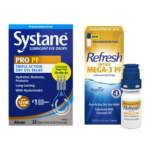
As eye doctors, we usually recommend sterile eye drops in single-use containers to reduce exposure to preservatives, which can increase allergic inflammation. AbbVie and Alcon have each separately developed a sterile, preservative-free bottle version of their premium eye drops, and I’m very impressed with both: Systane Pro PF (12 hours of treatment) and Refresh Optive Omega-3 PF (10 hours of treatment). Be sure to read the instructions and dispose of the drops as directed — the preservative-free formula may only last 2–3 months after opening.
A quick summary of basic dry eye treatment: treat underlying allergies, maintain a healthy diet with omega-3s, keep the eye area and lashes clean and free of chemicals and irritants, use warm compresses a few times a week, use a quality preservative-free lubricating eye drop 2–4 times daily, and avoid overwearing contact lenses. If these steps don’t resolve your dry eye, schedule an office visit with me to discuss prescription treatment options.
Conclusion: But Still Important
Your optometrist is your primary care eye doctor. We’re trained to provide wellness exams, treat many ocular diseases, and deliver acute eye care. We also specialize in complex vision problems, fit contact lenses, and dispense eyeglasses. Our staff is trained in customer care, navigating insurance, placing orders, arranging follow-up care, and understanding rebates.
Your Support Matters
Please add a Google review for Sudbury Eye Care, or reach out to the office at office@sudburyeye.com to let us know about your experience with exams, contact lenses, medical care, or our optical. We love patient stories describing your vision care experience — would you be willing to share yours for our webpage? It may help another person with the same symptoms seek the right treatment, or choose Sudbury Eye Care for their family’s eye exams. Small businesses and medical practices need your support to maintain the quality of service your family deserves.
— Dr. Lorraine Labiento Smith

Dr. L. As I call her is the best around! I have a very difficult prescription and schedule. She not only figured out my prescription which has two levels but, she also spent a long time trying to assist me in wearing contacts. Dr Smith is very accommodating. I am never rushed when I am there. I also have great frames thanks to her as well! Dr L does both pediatric and adult eye care and is well worth the trip if you aren’t from Sudbury !!! Thank you Dr L for the great care!!
Kathleen D. — Yelp

Learn More About: